Why the Sundarbans Matters:
The Sundarbans is the largest mangrove forest on Earth, spreading across roughly 10,000
square kilometers where the Ganges, Brahmaputra and Meghna rivers meet the Bay of
Bengal. About 60% of this forest lies in Bangladesh and it is recognized as a UNESCO
World Heritage Site for its rich and unique wildlife, including the Royal Bengal Tiger. This
forest protects the coast from storms, gives homes to fish and wildlife and supports the
daily lives of millions of people.
But this forest is under stress. Rising sea levels and strong tides are pushing salty water
further inland. At the same time, fallen leaves, dead plants and runoff from farms are
adding extra nutrients into the water. Too many nutrients can cause a problem called
eutrophication-a condition where the water becomes overloaded with nutrients, leading
to harmful algae growth and low oxygen levels that hurt fish and other marine life.
A Local Team, A Simple Tool And A Global Program:
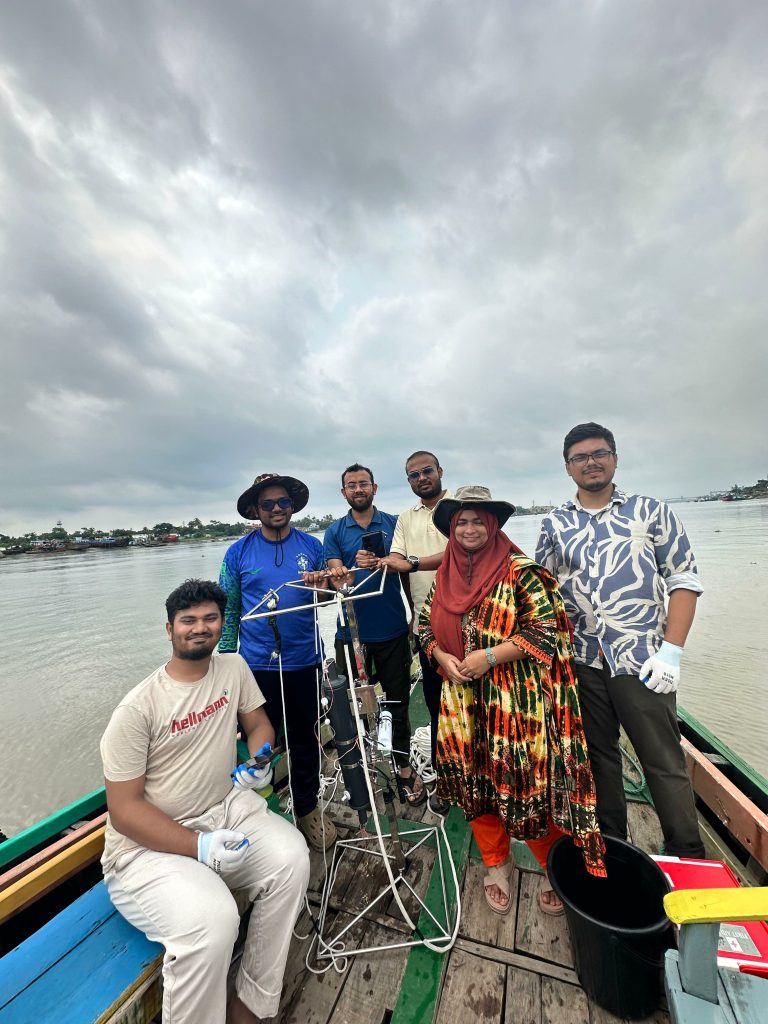
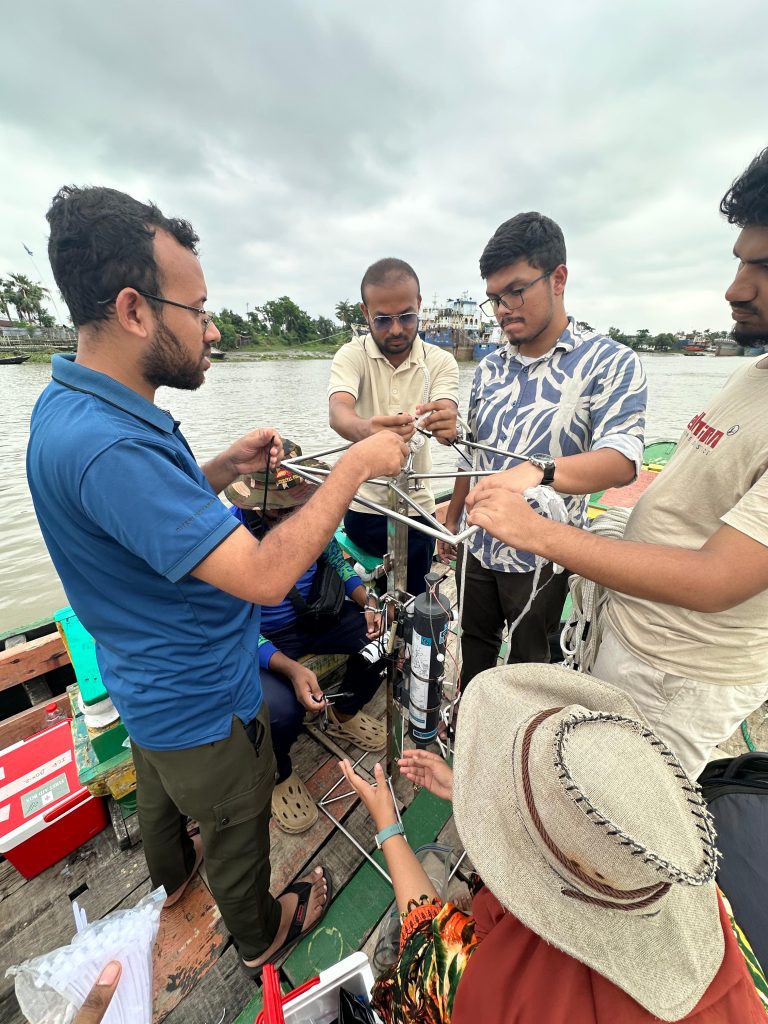
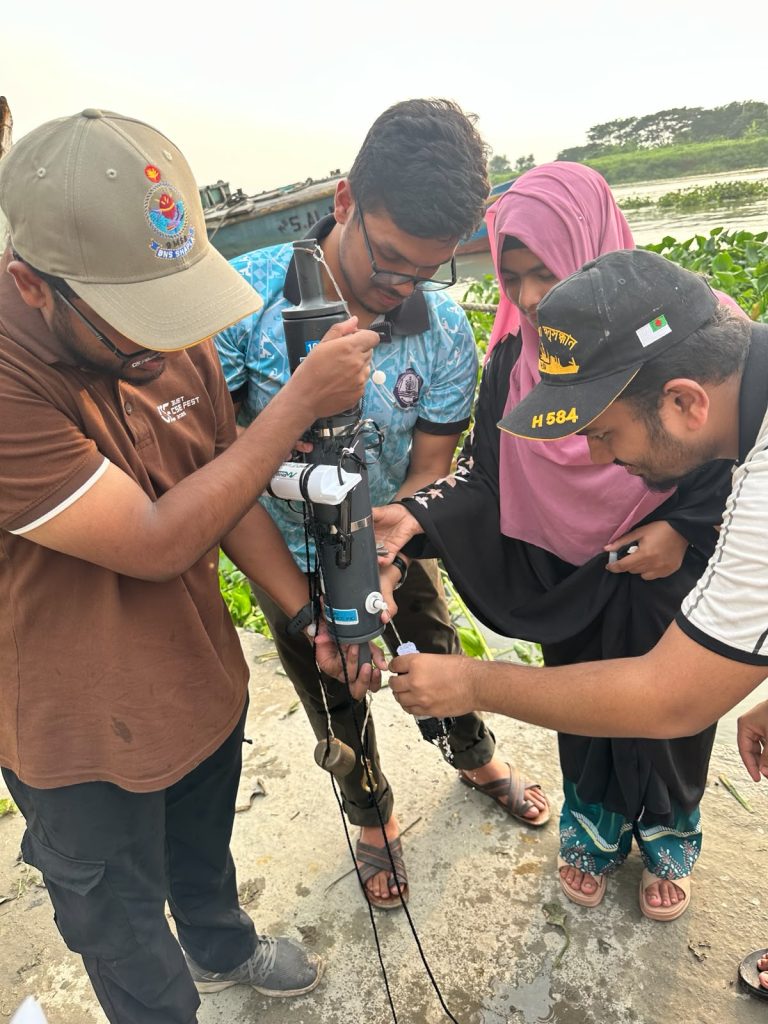
A non-profit group called Nirmol Bangladesh is stepping in to study this problem. Using a
portable water-testing tool called the GEM-in-a-Box kit-4, their team is collecting water
samples from three key locations across the Bagerhat, Khulna and Patuakhali districts.
They test the water every two weeks, timing their visits with both neap and spring tides, so
they can see how the tides affect nutrient levels.
GEM-in-a-Box stands for “Global Eutrophication Monitoring in a Box.” It is a low-cost
monitoring kit created through the Commonwealth Blue Charter Action Group on Ocean
Observation, working together with Canada’s Tula Foundation, Fisheries and Oceans
Canada and the Ocean Foundation. The goal of the program is simple: give research teams
in developing countries the tools and training they need to collect reliable, standardized
ocean data, even with limited funding.
The kit helps the Nirmol Bangladesh team measure:
Nitrogen and phosphorus – nutrients that can cause extra algae growth.
Dissolved oxygen – needed for fish and marine life to survive.
Chlorophyll-a – a sign of how much algae is in the water.
Salinity and pH – factors that affect the overall health of the water.
This simple, low-cost approach means even a small team with limited resources can collect
trustworthy, science-grade data.
From a Local River to a Global Database:
Here is where the story becomes bigger than one river. Nirmol Bangladesh has committed
to Open Science. This means every dataset and every piece of metadata they collect will
not stay locked away. Once fully processed, their data will be linked to the Hakai Data
Catalogue and shared openly on GitHub, making it freely available to anyone in the world
after December 2025.
By joining a standardized, global-scale monitoring effort, this small team in Bangladesh
becomes part of a much larger network. Their numbers sit alongside data gathered by
international partners such as Fisheries and Oceans Canada and members of the
Commonwealth Blue Charter Action Group. A water sample taken from a small creek in
the Sundarbans can now be compared side-by-side with samples from coastlines
thousands of kilometers away.
Connecting Daily Fieldwork to Global Goals:
Every boat trip, every water sample and every recorded number feeds directly into two
major global targets:
SDG 14 (Life Below Water): By tracking eutrophication, the team helps protect marine
ecosystems and the ocean life that depends on clean, balanced water.
SDG 6 (Clean Water and Sanitation): Monitoring nutrient pollution supports safer,
cleaner water for the coastal communities who rely on these rivers every day.
Small Data, Big Impact:
What makes this project powerful is not its size, it is its openness. A three-station
monitoring effort in Bangladesh, run with a simple field kit, is helping build a shared, global
picture of ocean health. This is what open science looks like in action: local knowledge,
honestly measured and freely shared, becoming a building block for worldwide ocean
protection.
References:
1. Tula Foundation. GEM-in-a-Box: Going Global with Eutrophication Monitoring.
https://tula.org/showcase/gem-in-a-box-going-global-with-eutrophication-monitoring
2.Commonwealth Secretariat. Eight Commonwealth countries advance ocean science with
Canada’s GEM-in-a-Box project. https://thecommonwealth.org/news/commonwealth-
countries-advance-ocean-science-gem-box
3.Hakai Institute. Data Publishing and Open Science Policy.
https://data.hakai.org/mobilization/publishing/
4.United Nations. Goal 14: Life Below Water. https://sdgs.un.org/goals/goal14
5.United Nations. Goal 6: Clean Water and Sanitation. https://sdgs.un.org/goals/goal6
6.UNESCO World Heritage Centre. The Sundarbans. https://whc.unesco.org/en/list/798/
7.UN Environment Programme. Monitoring Water Quality (GEMS/Water).
https://www.unep.org/topics/fresh-water/water-quality/monitoring-water-quality